Restore Your Smile with Advanced Dental Implants in Rajkot
Table of Contents
Reduced mouth opening
Reduced mouth opening, medically known as trismus, is a condition in which a person experiences difficulty opening their mouth fully. It can make everyday activities such as eating, speaking, brushing teeth, yawning and undergoing dental treatment difficult.
Reduced mouth opening can occur suddenly due to dental infections, wisdom tooth problems or jaw injuries. In some patients, it develops gradually due to conditions such as oral submucous fibrosis (OSMF), temporomandibular joint (TMJ) disorders or scarring of the oral tissues.
Early diagnosis is important because the treatment depends on the underlying cause.
What Is Normal Mouth Opening?
In most adults, normal maximum mouth opening is approximately 35–55 mm, although it varies between individuals.
A person who cannot open their mouth normally may have a condition called trismus or restricted mouth opening.
Common difficulties include:
- Difficulty eating large food portions.
- Difficulty brushing the back teeth.
- Pain while opening the mouth.
- Difficulty speaking or yawning.
- Difficulty during dental examination and treatment.
10 Common Causes of Reduced Mouth Opening
1. Oral Submucous Fibrosis (OSMF)
Oral submucous fibrosis is one of the important causes of progressively reduced mouth opening, particularly in people who chew gutkha, tobacco, betel nut (supari) or areca nut.
These substances can cause progressive fibrosis (formation of stiff fibrous tissue) beneath the oral mucosa. As the tissues become less flexible, the mouth gradually becomes difficult to open.
Common symptoms of OSMF:
- Burning sensation while eating spicy food.
- Difficulty opening the mouth.
- Tightness or stiffness inside the cheeks.
- White or pale appearance of oral mucosa.
- Difficulty moving the tongue.
- Presence of fibrous bands inside the cheeks.
OSMF is an oral potentially malignant disorder, meaning it carries an increased risk of developing oral cancer. Early diagnosis, complete cessation of areca nut and tobacco products, and regular Dental follow-up are essential.
2. Impacted Wisdom Tooth Infection
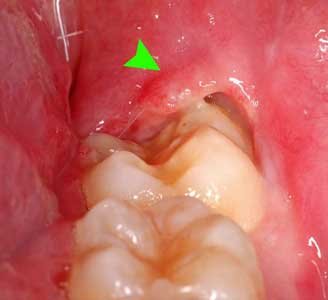
An impacted or partially erupted wisdom tooth can cause inflammation and infection of the surrounding gum tissue, a condition called pericoronitis.
In severe cases, inflammation can affect the nearby muscles responsible for jaw movement, resulting in pain and restricted mouth opening.
Symptoms may include:
- Pain near the back of the jaw.
- Swelling around the wisdom tooth.
- Difficulty opening the mouth.
- Pain while chewing.
- Bad taste or pus discharge.
- Fever in some cases.
Proper dental examination and treatment of the infection are necessary.
3. Temporomandibular Joint (TMJ) Disorders
The temporomandibular joint connects the lower jaw to the skull. Problems affecting this joint or its surrounding muscles can restrict normal jaw movement.
Possible causes include:
- Displacement of the TMJ disc.
- Joint inflammation.
- Degenerative joint disorders.
- Jaw muscle dysfunction.
- Joint injury.
Common symptoms:
- Pain near the ear or jaw joint.
- Clicking or popping sounds while opening the mouth.
- Difficulty opening the mouth completely.
- Jaw deviation during opening.
- Pain while chewing.
Treatment depends on the specific joint or muscle problem.
4. Dental Infection and Abscess
Infections originating from teeth or surrounding tissues can sometimes spread into nearby facial spaces and muscles.
This can cause pain, swelling and difficulty opening the mouth.
Common dental sources include:
- Deep dental caries.
- Tooth root infections.
- Periodontal infections.
- Infected wisdom teeth.
A spreading dental infection requires prompt professional assessment.
5. Trauma or Injury to the Jaw
An accident, sports injury or direct blow to the face can damage the jawbone, surrounding muscles or TMJ.
Depending on the severity of the injury, patients may experience:
- Pain while opening the mouth.
- Swelling around the jaw.
- Restricted jaw movement.
- Difficulty chewing.
- Changes in the bite.
A fracture or significant injury may require imaging and specialist treatment.
6. Muscle Spasm or Inflammation
The muscles responsible for chewing and jaw movement may become painful or go into spasm.
This may occur due to:
- Prolonged dental procedures.
- Excessive mouth opening.
- Local injections.
- Muscle injury.
- Inflammation around the jaw.
Temporary restricted mouth opening may occur after certain dental procedures, particularly wisdom tooth surgery.
7. Infection Around the Jaw and Facial Spaces
Infections involving the deeper tissues around the jaw can cause significant swelling and restricted mouth opening.
Examples include:
- Masticator space infection.
- Submandibular space infection.
- Peritonsillar infection.
These conditions may be associated with fever, facial swelling, difficulty swallowing or severe pain. Some require urgent hospital treatment.
8. Previous Surgery or Radiation Therapy
Patients who have undergone surgery or radiation therapy in the head and neck region may develop fibrosis and scarring of the surrounding tissues.
This can reduce the flexibility of jaw muscles and surrounding structures, resulting in long-term restricted mouth opening.
Regular follow-up and supervised jaw rehabilitation may help improve function.
9. Ankylosis of the Temporomandibular Joint
Patients who have undergone surgery or radiation therapy in the head and neck region may develop fibrosis and scarring of the surrounding tissues.
This can reduce the flexibility of jaw muscles and surrounding structures, resulting in long-term restricted mouth opening.
Regular follow-up and supervised jaw rehabilitation may help improve function.
10. Other Medical Conditions
Certain neurological, inflammatory and systemic conditions can also affect jaw movement.
Examples include:
- Tetanus.
- Inflammatory joint disorders.
- Neurological conditions.
- Certain tumours affecting the jaw or surrounding tissues.
A detailed clinical evaluation is required to identify the underlying cause.
Frequently Asked Questions (FAQs)
There is no single most common cause for everyone. Dental infections, wisdom tooth problems, TMJ disorders and oral submucous fibrosis are important causes. In patients with a history of gutkha or supari chewing, OSMF should be carefully evaluated
Yes. Regular use of gutkha and areca nut-containing products can cause oral submucous fibrosis. This condition progressively makes the oral tissues stiff and reduces mouth opening.
Reduced mouth opening does not automatically indicate oral cancer. However, OSMF and certain oral lesions are associated with an increased risk of oral cancer. Persistent ulcers, red or white patches, unexplained lumps or progressive restriction require professional evaluation.
Many cases improve when the underlying cause is treated. However, advanced fibrosis, joint ankylosis and radiation-related scarring may require prolonged rehabilitation or surgical treatment. The outcome depends on the cause and severity.
Normal adult mouth opening is generally around 35–55 mm, with individual variation. A measurement below approximately 35 mm may suggest restricted mouth opening and should be assessed in context.
A dental surgeon of Sanjivani Dental hospital can evaluate restricted mouth opening and may suggest test report if required
Yes, appropriately prescribed physiotherapy and jaw exercises can improve movement in selected cases. However, exercises alone cannot treat every cause, particularly infections, advanced fibrosis or joint ankylosis.
Get Your Mouth Opening Evaluated at Sanjivani Dental Hospital, Rajkot
Reduced mouth opening can affect your ability to eat, speak, maintain oral hygiene and enjoy everyday activities.
At Sanjivani Dental Hospital, Rajkot, patients can undergo dental evaluation to identify possible causes of restricted mouth opening and understand the appropriate treatment options.
Do not ignore gradually decreasing mouth opening, especially if you have a history of gutkha, tobacco or supari chewing.
Book a dental consultation for proper diagnosis and timely treatment for reduce mouth opening treatment
Medical references
The clinical information is writen by Dr Divyesh Patel and supported by: